7 Signs of Self-Sabotage That Look Like Being Responsible
The signs of self-sabotage that are hardest to spot don't look like sabotage at all. They look like patience, research, preparation and hard work. Here are seven of them, the phrase that gives each one away, and one small thing to do instead.

A while ago I was on a call with someone who could help this very book reach far more readers. The next step was obvious and easy: say yes, and put a date in the calendar.
Instead, I heard myself say: “This is really interesting. Let me think about it and get back to you next week.”
The moment the words were out, I felt it. A small, warm wave of relief. Nothing had to happen yet. And I had just done the exact thing my book The Self-Sabotage Code is about, on a call about that book.
I sat with the embarrassment for about thirty seconds. Then, within the hour, I sent an email: “Actually, I don’t need to think about it. Let’s schedule that call for Thursday.”
That is the trouble with self-sabotage. The loud kind is easy to see: the missed deadline, the cancelled plan, the binge the night before the big day. The quiet kind sounds like good judgment. “Let me think about it” sounds mature. Nobody would call it sabotage, including you.
This post is about the quiet kind. It covers seven signs, each one dressed up as a virtue, the phrases that often give each one away, and one small thing to do when you catch it.

Why self-sabotage looks like responsibility
Each of these patterns borrows the clothes of a good habit. Waiting looks like patience. Research looks like diligence. Comparing options looks like care. That is why they last for years: when someone questions them, they have a respectable answer ready.
There is also a reward built in, and it is the relief. Delaying something uncomfortable makes the discomfort drop right away. Psychologists call this negative reinforcement: a behaviour that ends an unpleasant feeling becomes more likely next time. Researchers Fuschia Sirois and Tim Pychyl describe procrastination in similar terms, as putting your mood right now ahead of what your future self will have to deal with. You aren’t choosing to fail. You are choosing to feel better for the next ten minutes, over and over.
And the cost adds up. In a 2016 review of the research, Paschal Sheeran and Thomas Webb concluded that people turn their intentions into action only about half the time. This post is about some of the reasonable-sounding reasons that fill that gap.
If you want the longer story of why we work against ourselves, I wrote about it in the strange logic of self-sabotage. This post is the practical part: how to spot it while it is happening.
The 7 signs of self-sabotage
The names in brackets are the names I use for each pattern in the book. You don’t need to remember them. The phrases matter more, because, as I put it in the book, your language changes before your behavior does.

1. You’re waiting for the right time
It looks like: patience. Good timing. Being realistic about how busy you are.
It sounds like: “Once I…, then I…” “When things settle down…” “I’m just waiting for…”
The waiting always has a reason, and the reason is always fair: after the move, after the project, after the kids’ exams, after the new year. The trouble is that a new reason is ready the moment the old one expires. (In the book this is Delayed Life Syndrome.)
Catch it with this question: “What’s the ugly step I can take right now, before that condition is met?”
Try this: take one action before you feel ready. Not the right action. Any action. If you need a method for that, start with the 10-minute Ugly Step.
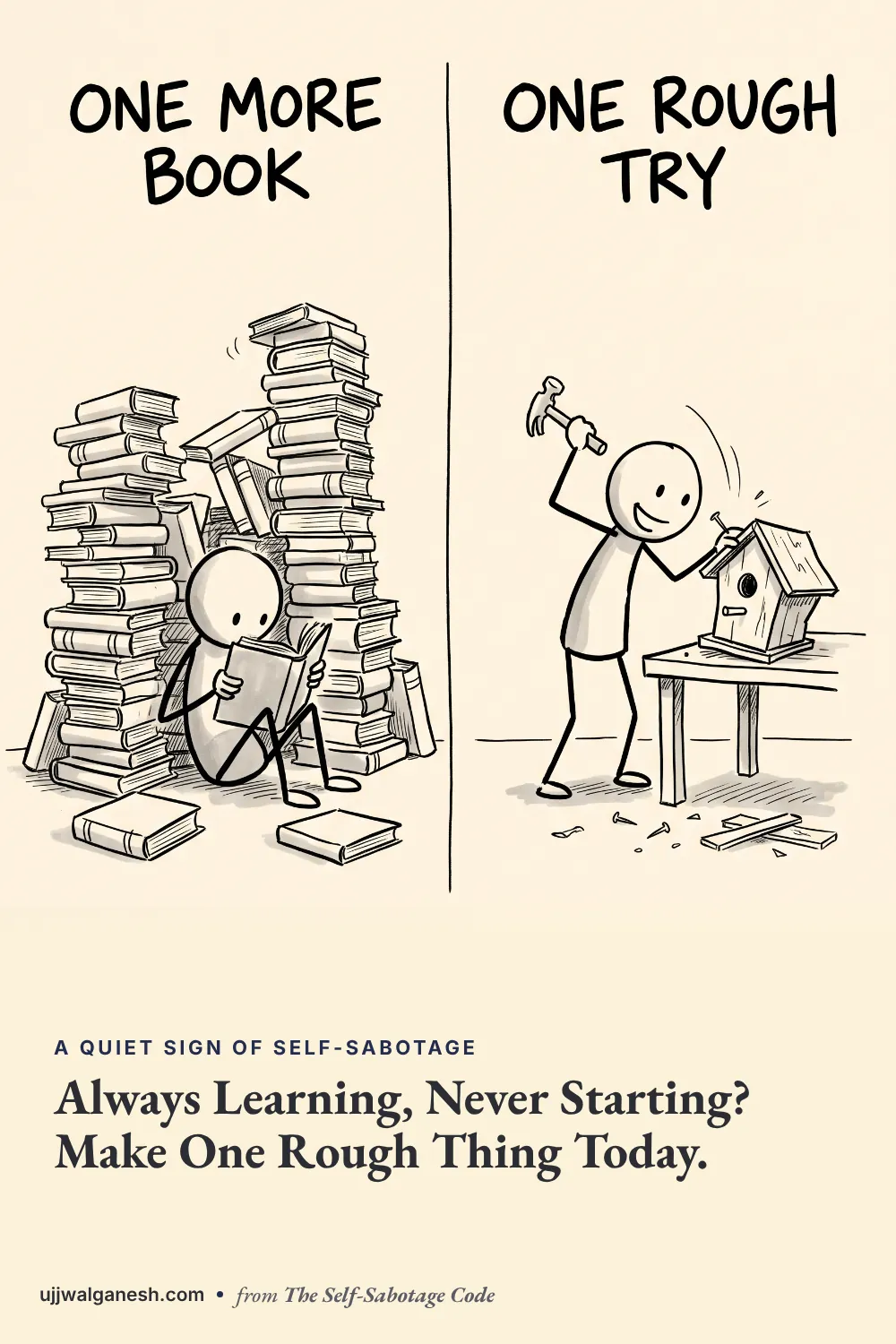
2. You keep learning instead of doing
It looks like: being thorough. Doing your homework. Wanting to do it properly.
It sounds like: “I need to finish learning this first…” “Let me just read one more…” “I should understand this better before…”
The book paints the picture: forty-seven unread books on a Kindle, twelve online courses stuck at 8% completion, a notes app with 23 folders and more than 200 saved articles nobody has opened since. Each one felt like progress when you saved it. Saving feels like doing. It isn’t. (The Collector’s Fallacy.)
Catch it with this question: “Can I create something ugly with what I already know?”
Try this: for one week, make something with what you already know before you take in anything new. One rough paragraph, one sketch, one test. You probably know enough to begin.
3. You say “that’s just not me”
It looks like: self-awareness. Knowing your limits. Being honest about who you are.
It sounds like: “I’m not that kind of person.” “That’s just not me.” “I’ve never been good at…”
Knowing yourself is healthy. The sign is when a label is standing between you and something you actually want. “I’m not a public speaker.” “I’m not a numbers person.” “I’m not creative.” These sentences feel like facts, but most of them are old conclusions you never checked again. (Identity Lockdown.)
Catch it with this question: “What if that identity is a prison, not a truth?”
Try this: do one small thing that the label says you “don’t do”, somewhere nobody knows you. Post a drawing on an anonymous account. Join a beginners’ class across town. Low stakes and no audience make it easier to test whether the label still holds.
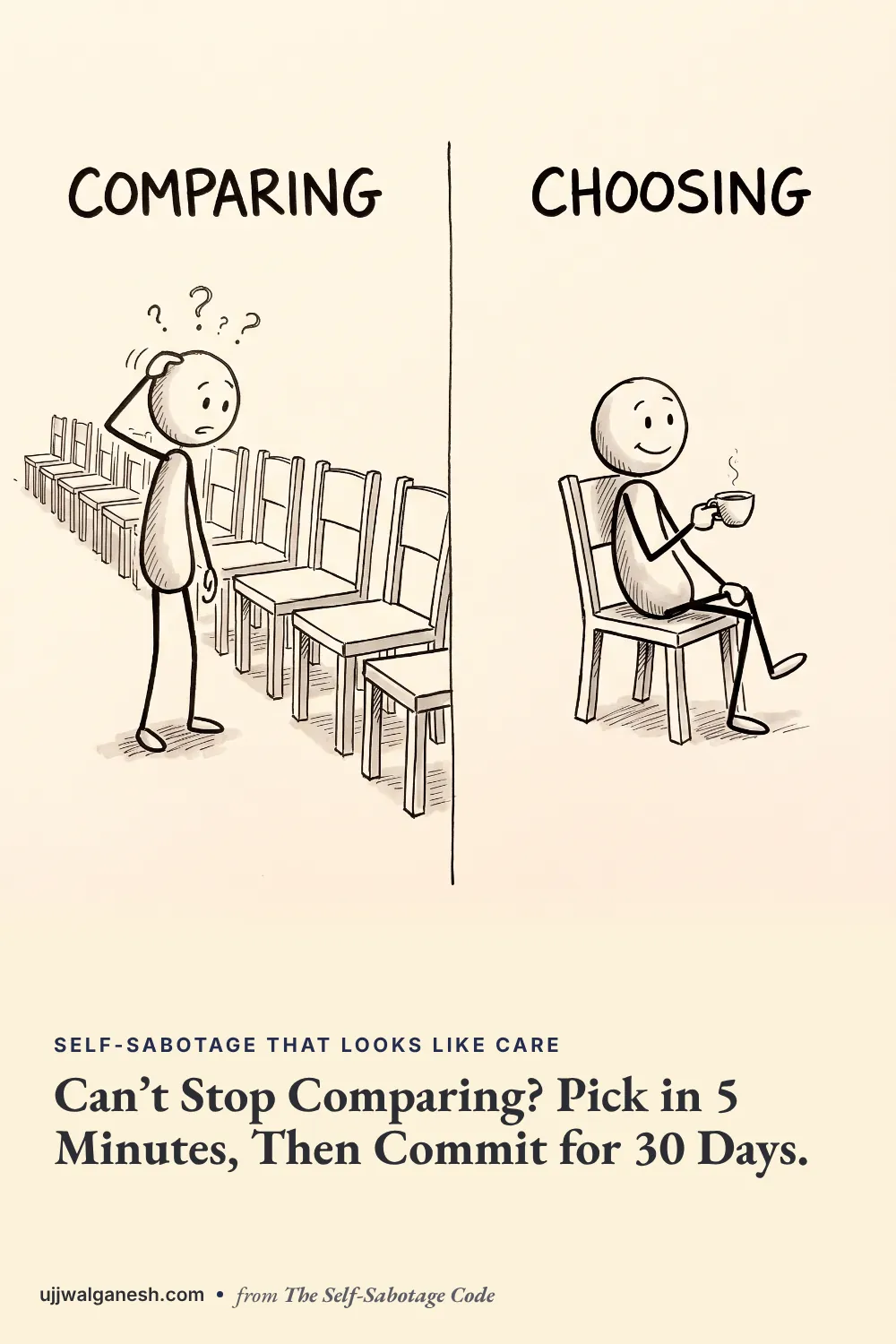
4. You keep comparing options
It looks like: being careful. Making a smart, informed decision.
It sounds like: “I just need to compare a few more options…” “What if there’s something better?” “I want to make sure I choose the right one.”
The third laptop review. The fourth productivity app. Two courses that are, honestly, almost the same. Every comparison feels responsible, and every one pushes the actual start a little further away. (The Optimization Trap.)
Research points the same way, though it can’t show cause and effect. In a well-known 2002 study, psychologist Barry Schwartz and colleagues compared “maximizers”, people who always try to find the best option, with “satisficers”, who pick something good enough. Maximizers reported less happiness and life satisfaction and more regret, and they were less satisfied with the things they chose. These were correlations, not proof that comparing causes unhappiness, but they are worth knowing about if you recognise yourself as a maximizer.
Catch it with this question: the book’s rule is that once you have been researching for more than thirty minutes, you stop and ask, “If I had to choose in the next five minutes, which would I pick?”
Try this: choose “good enough” and commit to it for 30 days before you are allowed to compare again.
5. You rehearse instead of doing
It looks like: being prepared. Thinking before you speak.
It sounds like: this one is mostly silent. It is the conversation you have had twenty times in the shower and zero times with the actual person.
Preparing for an important talk is sensible. The sign is when the rehearsal replaces the conversation: the same imaginary exchange on repeat, with the anxiety growing a little on every replay. (The Rehearsal Loop.) If that loop keeps you awake, the thinking traps in how to stop overthinking will look familiar.
Catch it with this question: “Can I do this unrehearsed in the next hour?”
Try this: treat it as an experiment, not a test. Pick one low-stakes conversation and have it within the hour, with no rehearsal. Then notice what actually happened compared with what you rehearsed. One honest note: for some autistic people, a short script is a genuine support rather than avoidance. If a script helps you go into the conversation, keep it. The sign is when it keeps you out. And if you live with social anxiety, mental rehearsal can quietly keep the fear going; a therapist can help you tell the difference between preparation that helps and rehearsal that holds you back.

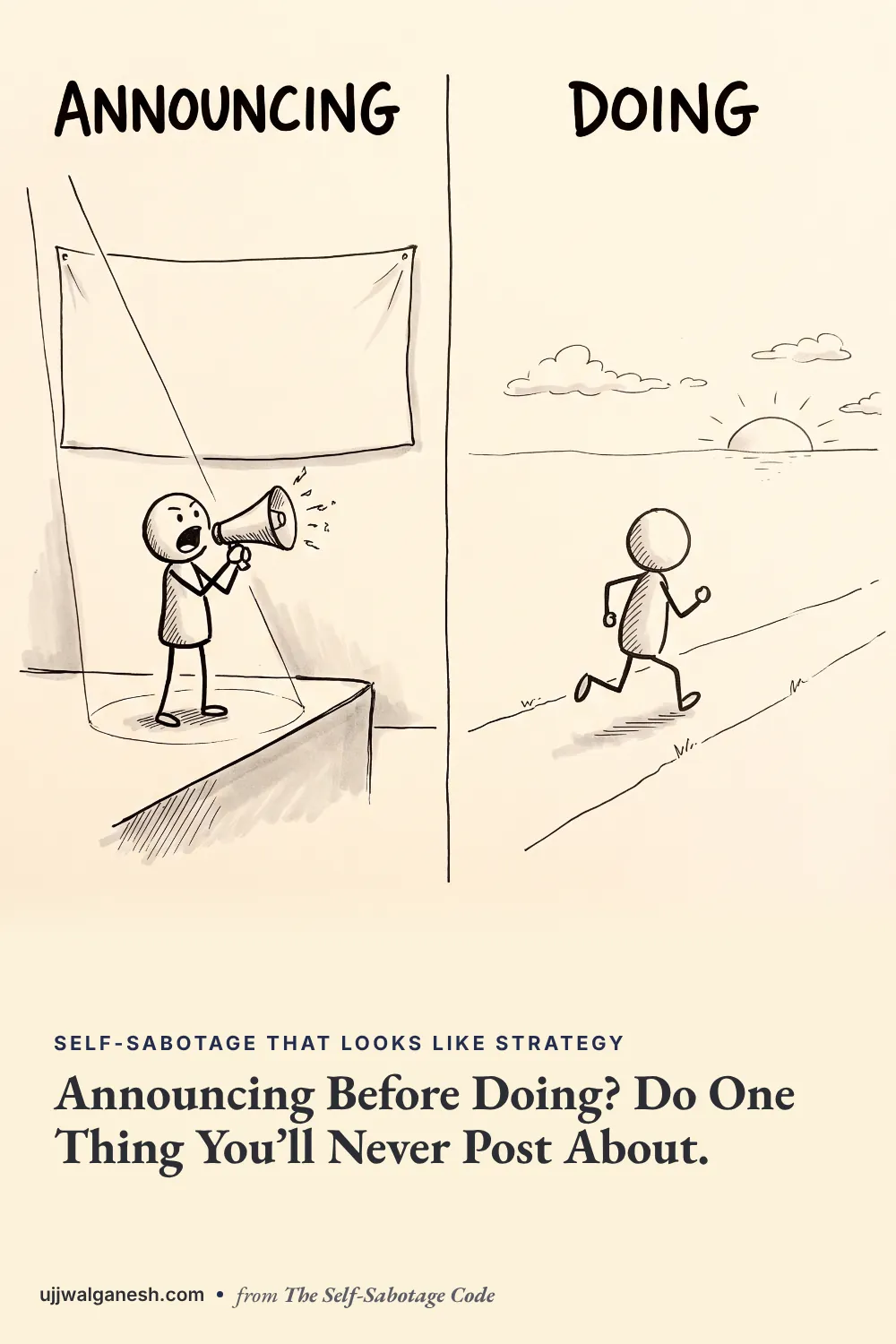
6. You announce it before you do it
It looks like: being strategic. Building an audience. Accountability.
It sounds like: “I’m building my platform first.” “I’ll share the journey.” “Let me set up the page before I start.”
The logo before the first customer. The writing account before the first chapter. The announcement before the first workout. You start caring more about how it looks than how it feels. (Proxy Goal Syndrome.)
In 2009, Peter Gollwitzer and colleagues ran four small experiments on identity goals, such as becoming a lawyer or a psychologist. In three of them, when an experimenter took notice of what someone intended to do, that person then worked on it less, at least among people strongly committed to the goal. The fourth suggested that being noticed made people feel they were already partly the person they wanted to become. They were small studies, so treat this as a clue rather than a law. It matches what many of us have felt: the announcement can quietly stand in for the work.
Catch it with this question: “What’s the invisible action I could take instead?”
Try this: this week, do one piece of the work that you will never post about. Tell people what you did, not what you are going to do.
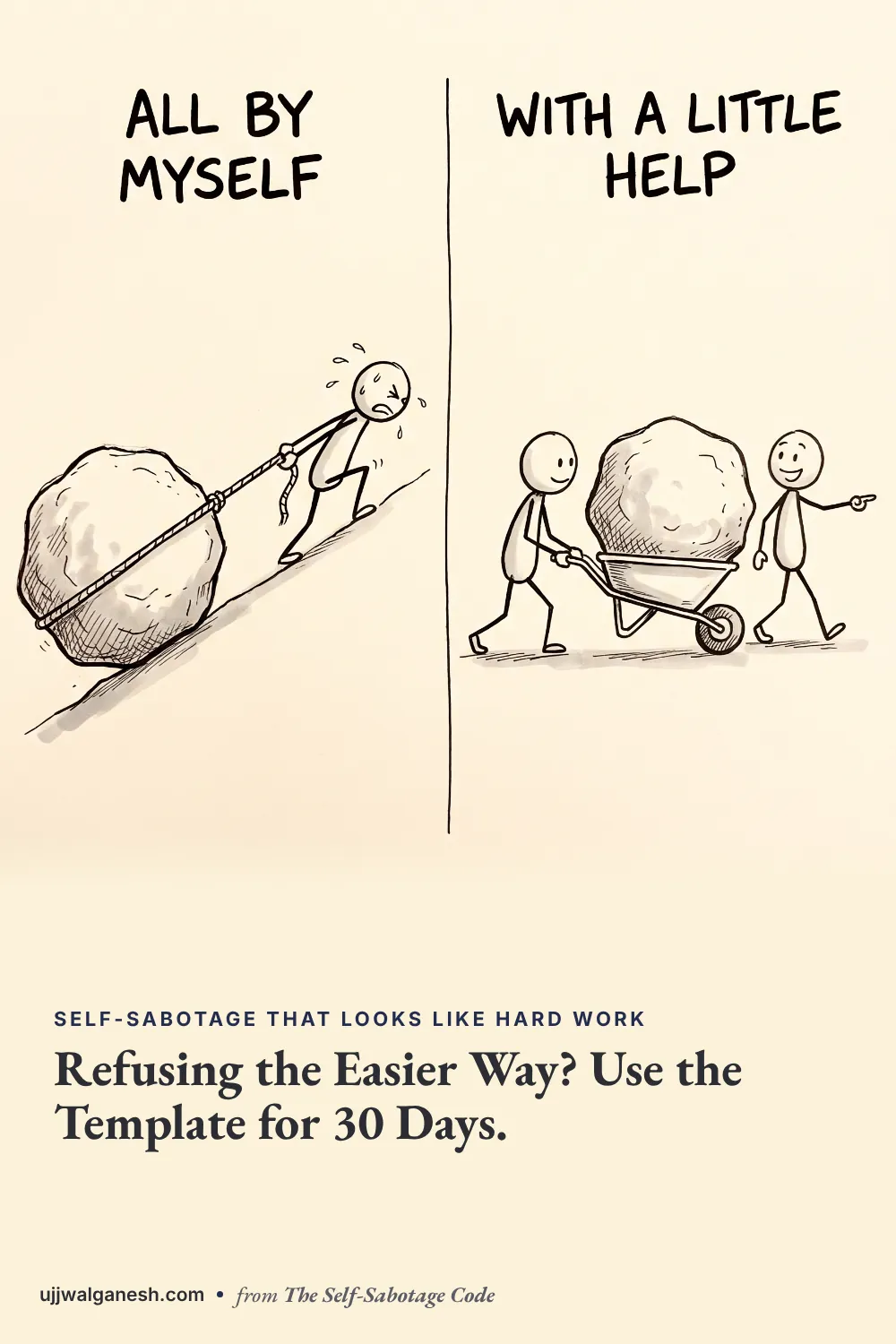
7. You refuse the easier way
It looks like: hard work. Integrity. High standards.
It sounds like: “I should do this myself…” “I don’t want to take the easy way…” “It won’t count if I use help…”
One of the stories in the book is about a designer who never used templates, ever. Every project started from a blank page and took him about three times as long as it took his colleagues. He called it integrity. Then he needed surgery, a client project was due, and he had no choice but to use a colleague’s framework. The project took four days instead of three weeks, and the client called it his best work yet. The suffering had never improved the work. (The Noble Struggle.)
Catch it with this question: “Am I refusing this because it’s wrong, or because it’s easy?”
Try this: for 30 days, accept the help, use the template, or follow the recipe. Then judge the results, not the effort.
Three more clues in what you do
Sometimes your words give nothing away. These three behaviour clues from the book often do:
- What are you doing instead of the thing? Organising your notes, redesigning your system, preparing your workspace. Activity that surrounds the goal but isn’t the goal is often the pattern at work.
- How does it feel when you decide to delay? Notice the relief. It is real, and it is the reward that teaches you to delay again. Treat it as a warning light, not a solution.
- Whose reassurance are you looking for? Asking around whether your approach is right, whether you’re ready, whether now is the time, can be a way of asking permission to wait.
Recognise three of these? Start with the weakest one
Very few people have all seven. In the book I suggest that most people have about three that work as a team.
One is your home pattern: the one that doesn’t feel like a pattern at all, just “how I am”. The other two support it. They supply the backup excuses, and they pull you back when you almost escape.
The patterns tend to travel in groups:
- The Eternal Researcher: waiting for the right time, learning instead of doing, and comparing options.
- The Suffering Artist: “that’s just not me”, refusing the easier way, and announcing before doing.
- The Instagram Entrepreneur: rehearsing instead of doing, announcing before doing, and comparing options.
A pattern can sit in more than one group.
Here is the part most people get backwards: don’t start with your home pattern. It is too tied up with how you see yourself, and pushing on it head-on often backfires. Start with the weakest of the two supporters. Once that one falls, the home pattern loses its backup excuses and becomes much easier to see and to deal with.
The 3-Day Rule
If you remember one thing from this post, make it this rule from the book:
If you’ve been “planning” something for more than three days, take an ugly step. No exceptions.
Three days is enough to sort out the basic logistics. It isn’t long enough for the sophisticated excuses to settle in. After that, more planning usually just means more waiting.
A 10-minute Sunday check
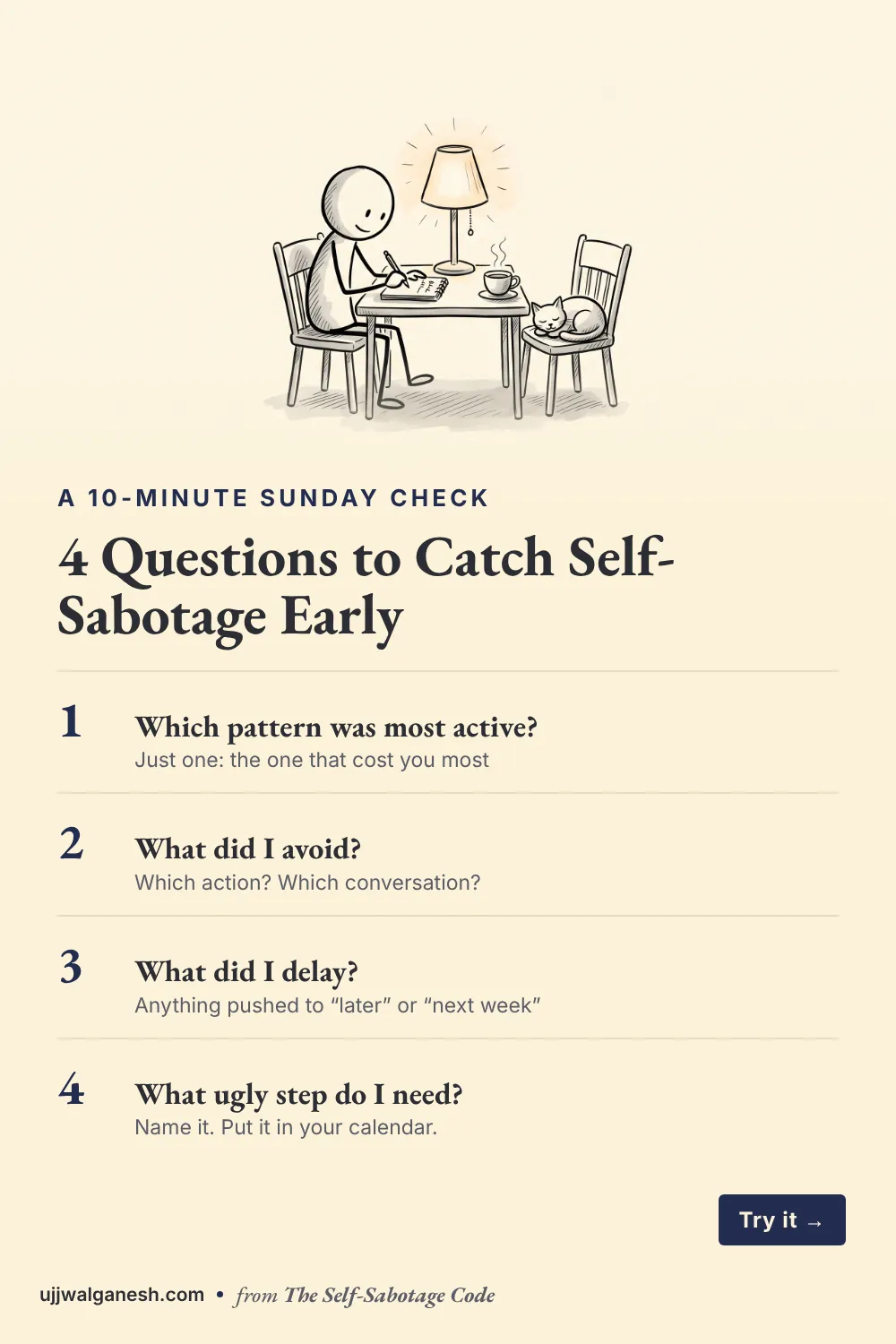
Patterns come back, often in new clothes: “This time I’m not procrastinating, I’m being strategic.” So the book suggests ten minutes every Sunday evening with four questions:
- Which pattern was most active this week? Just one: the one that cost you the most.
- What did I avoid? Be specific. Which action, which conversation?
- What did I delay? What got pushed to “later”, “next week” or “when I’m ready”?
- What ugly step do I need this week? Name it and put it in your calendar.
You won’t stop the patterns from showing up. The goal is to catch them in hours instead of months, the way a single email fixed my “let me think about it”.
The 7 signs at a glance
| Sign | It looks like | Listen for | Ask yourself |
|---|---|---|---|
| Waiting for the right time | Patience | “Once I…, then I…” | What can I do before that condition is met? |
| Learning instead of doing | Being thorough | “Let me just read one more…” | Can I make something ugly with what I already know? |
| “That’s just not me” | Self-awareness | “I’ve never been good at…” | What if that identity is a prison, not a truth? |
| Comparing options | Being careful | “What if there’s something better?” | Which would I pick in the next five minutes? |
| Rehearsing instead of doing | Being prepared | The same imaginary conversation on repeat | Can I do this unrehearsed in the next hour? |
| Announcing before doing | Being strategic | “I’m building my platform first” | What’s the invisible action I could take instead? |
| Refusing the easier way | Hard work | “It won’t count if I use help” | Am I refusing this because it’s wrong, or because it’s easy? |
When it’s more than self-sabotage
These signs describe everyday patterns that many people recognise in themselves. They are not a diagnosis. If holding yourself back comes with low mood that won’t lift, constant worry, trouble focusing on almost everything, or it is seriously hurting your work, sleep or relationships, please talk to a doctor or a counsellor. Sometimes something else sits underneath, such as anxiety, depression or ADHD, and it deserves real help, not just a better checklist.
Go deeper: The Self-Sabotage Code
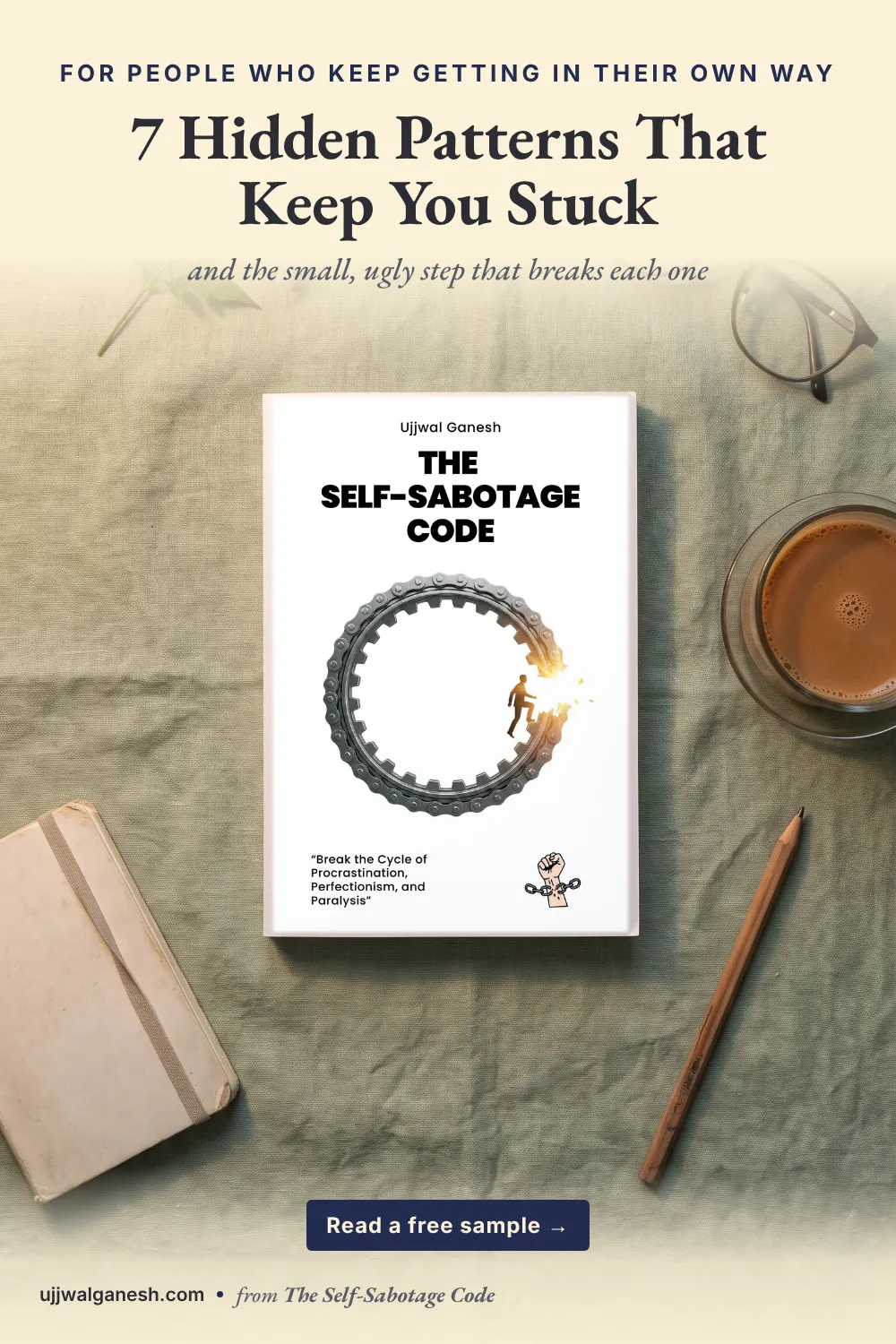
The seven signs in this post come from my book The Self-Sabotage Code: Break the Cycle of Procrastination, Perfectionism, and Paralysis. It gives each pattern its own chapter and its own small, deliberately imperfect step to break it, and a whole chapter on catching the patterns early: the warning phrases, the 3-Day Rule and the weekly check from this post. It won’t stop the patterns from coming back. It helps you catch them in hours instead of months.
I wrote this book. Links to Amazon are paid links: I earn a small commission on qualifying purchases, on top of my author royalty.
Get it on Amazon: Kindle (paid link) · Paperback (paid link) · Hardcover (paid link)
Readers in India: Kindle on Amazon.in (paid link) · More about the book on its book page.
Frequently asked questions
What are the signs of self-sabotage?
The obvious signs are things like missing deadlines, cancelling plans or picking fights before something good happens. The quieter signs look like good habits: always waiting for the right time, endless learning or research, writing yourself off with “that’s just not me”, comparing options without choosing, rehearsing conversations instead of having them, announcing plans before acting, and refusing help because the hard way feels more honest.
How do I know if I’m self-sabotaging or just being careful?
Look at the result over time, not the reason. Being careful leads to a decision and an action. Self-sabotage leads to more preparation. If you have been “planning” the same thing for weeks and feel relief each time you postpone it, that is the pattern, not caution.
How do I stop self-sabotaging?
Catch the phrase, ask its question, and take one small, imperfect action the same day. Start with a pattern that feels less like “who I am”, because the one that feels most like you is the hardest to tackle first. A ten-minute weekly check helps you notice when the patterns return in new forms.
Is self-sabotage a mental illness?
Not on its own. Self-sabotage is not a diagnosis. It is an everyday word for patterns that work against your own goals. It can overlap with conditions such as anxiety, depression or ADHD, so if it comes with ongoing distress or affects your daily life, talk to a doctor or a mental health professional.
Illustrations created with AI (Google Gemini) and edited by the author; the book cover is the real cover. The seven patterns, questions and rules are adapted from The Self-Sabotage Code. Sources: Sheeran, P. & Webb, T. L. (2016), “The intention–behavior gap”, Social and Personality Psychology Compass 10(9); Sirois, F. & Pychyl, T. (2013), “Procrastination and the priority of short-term mood regulation”, Social and Personality Psychology Compass 7(2); Schwartz, B. et al. (2002), “Maximizing versus satisficing: happiness is a matter of choice”, Journal of Personality and Social Psychology 83(5); Gollwitzer, P. M., Sheeran, P., Michalski, V. & Seifert, A. E. (2009), “When intentions go public: does social reality widen the intention-behavior gap?”, Psychological Science 20(5).