Your visitors aren’t bad people. They aren’t trying to be difficult. They are just human.
But here is the mistake that most business owners (and even many marketers) make: We design for an idealized user.
We imagine a visitor who is patient, focused, and trusting. We imagine them sitting in a quiet room, sipping tea, reading every word of our copy, and carefully weighing the logical merits of our offer.
That user does not exist.
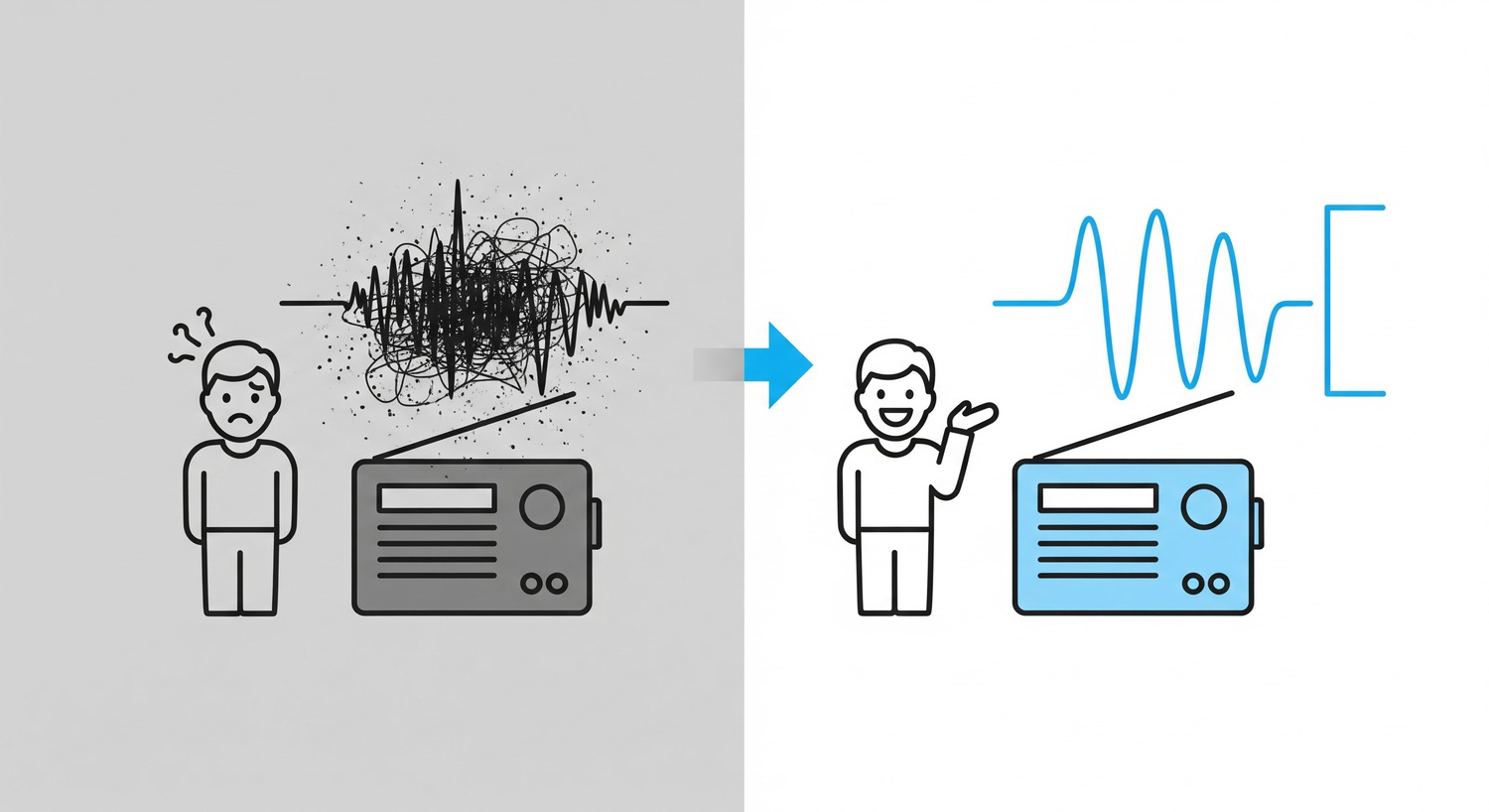
The real human on the other side of the screen is likely distracted, stressed, and juggling a dozen other open tabs. They are operating on a set of deeply ingrained survival instincts that make them ruthless with their attention.
If you want to fix your conversion rate, you must stop designing for the fantasy and start designing for the reality.
You must accept the Four Truths of online behavior. Your visitor is fundamentally Lazy, Impatient, Judgmental, and Skeptical.
This isn’t an insult. It’s biology. And understanding it is the first step to building a website that actually sells.
Meet Your Real Visitor
These four traits aren’t character flaws. They are mental shortcuts—heuristics—that our brains use to survive in a world of infinite information.
When a visitor lands on your site, they aren’t looking for a reason to stay; they are looking for a reason to leave. They are looking to conserve calories (Lazy), save time (Impatient), avoid risk (Skeptical), and make quick decisions (Judgmental).
If you fight these truths, you lose. If you design for them, you win.
Let’s explore who your visitor really is.
Truth #1: Your Visitor Is Lazy (The Law of Least Effort)
Let’s start with the most important one. Your visitor is an energy miser.
The human brain consumes a massive amount of energy, and evolution has wired us to conserve it whenever possible. This is the Law of Least Effort.
When we browse the web, we don’t read; we hunt. We scan for keywords and easy answers. If your website forces a user to think—to decipher jargon, to find a hidden menu, or to figure out what you actually do—you are taxing their brain. You are creating “Cognitive Load.”
The 20% Truth
Eye-tracking studies have revealed a sobering statistic: On an average webpage, users read only 20% to 28% of the words.
That means 80% of your beautiful copy is invisible. If you bury your value proposition in the third paragraph, it doesn’t exist.
The Backward Bicycle
Imagine trying to ride a bicycle where turning the handlebars left makes the wheel go right. You technically know how to ride a bike, but this change fights your muscle memory. It requires immense, exhausting concentration.
When you use “clever” navigation or hide your pricing, you are forcing your visitor to ride a backward bicycle. They won’t bother learning. They’ll just walk away.
Truth #2: Your Visitor Is Impatient (The Currency of Now)
If laziness is the engine, impatience is the gas pedal.
In the digital world, the currency is not money; it is time. And your visitor is broke.
This impatience is primal. For our ancestors, a delay could mean missing a meal or becoming one. Today, that instinct translates into a fierce intolerance for waiting.
The 7% Penalty
The cost of this impatience is measurable. Data shows that a single 1-second delay in page load time can result in a 7% drop in conversions.
If your site takes three seconds to load, you have already lost a chunk of your audience to the back button.
The Elevator Pitch
Think of your website like an elevator pitch. You step in, the doors close, and you have 15 seconds before the person gets off. You don’t have time for a long backstory. You have time for the hook.
If your site doesn’t load instantly and communicate value immediately, the doors open, and your visitor is gone.
Truth #3: Your Visitor Is Judgmental (The First Impression Fallacy)
We are taught, “Don’t judge a book by its cover.” Online, we do the exact opposite.
We judge the credibility of a business based entirely on the aesthetics of its website. And we do it with terrifying speed.
Researchers have found it takes just 50 milliseconds (0.05 seconds) for a user to form an opinion about your website’s design.
That is faster than the blink of an eye.
The Halo Effect
If your design looks cluttered, dated, or amateurish, that judgment bleeds into everything else. This is the “Halo Effect.”
A visitor subconsciously thinks: If their website is messy, their product is probably messy. If they can’t get the pixels right, they probably can’t get the service right.
You might be the best consultant in the world (like “Capital Solutions” in my book), but if your website looks like it was built in 1998, you will lose to a competitor with a modern design (“Evergreen Wealth”) every single time.
Truth #4: Your Visitor Is Skeptical (The Trust Deficit)
Finally, we arrive at the hardest barrier to break. Your visitor doesn’t trust you.
They have been burned before. They have bought products that broke, signed up for “free” trials that charged them, and clicked on clickbait that led nowhere. They arrive at your site with a “Trust Deficit.”
The Pain of Loss
Psychologically, we are wired for Loss Aversion. The pain of losing $100 is roughly twice as powerful as the pleasure of gaining $100.
Your visitor’s primary goal isn’t to buy your product; it’s to avoid being ripped off.
The Street Vendor’s Gambit
Imagine a street vendor selling watches from a blanket. You might see a nice watch, but you hesitate. Is it real? Will it break? Will he be here tomorrow if I want a refund?
Now imagine a clean, well-lit store with a sign that says “Established 1990” and a line of happy customers. You trust it.
Your website is the store. If you don’t provide social proof—testimonials, reviews, trust badges—you are just a guy with a blanket.
It’s why 93-99% of consumers read reviews before making a purchase. They are looking for safety in numbers.
[Related: Not All Testimonials Are Created Equal: The Anatomy of Social Proof That Sells]
The Aha Moment: Designing for Reality
Here is the good news: These truths aren’t obstacles. They are design requirements.
Once you accept that your visitor is lazy, impatient, judgmental, and skeptical, you stop fighting them and start helping them.
- Because they are Lazy, you make your action Obvious.
- Because they are Impatient, you use Clarity to answer their questions instantly.
- Because they are Judgmental, you invest in professional design.
- Because they are Skeptical, you layer your site with Evidence.
This is the foundation of the C.O.N.V.E.R.T. Method. It’s not about tricking people; it’s about removing the friction that stops them from getting what they want.
Conclusion
You cannot change human nature. You cannot force your visitors to read, wait, or trust blindly.
But you can build a website that honors their reality. When you do, you stop being a source of frustration and start being the solution they’ve been looking for.
Your Next Step: Now that you understand the why behind visitor behavior, it’s time to look at the what. Specifically, what are you actually selling them? (Hint: It’s not your product). Read the next article: Stop Selling Products: The Transformation Framework That Actually Converts
The Four Truths are just the beginning. To learn the complete design frameworks for addressing each truth—including the “Obvious Action” protocols and the “Trust Architecture” blueprints—get your copy of Decoding The Click.