The everyday problem
When the Words Jump Out First
Some children have the answer before the question is finished, and it bursts out before the stopping arrives. It isn’t rudeness. It’s a thought that feels too finished to hold.
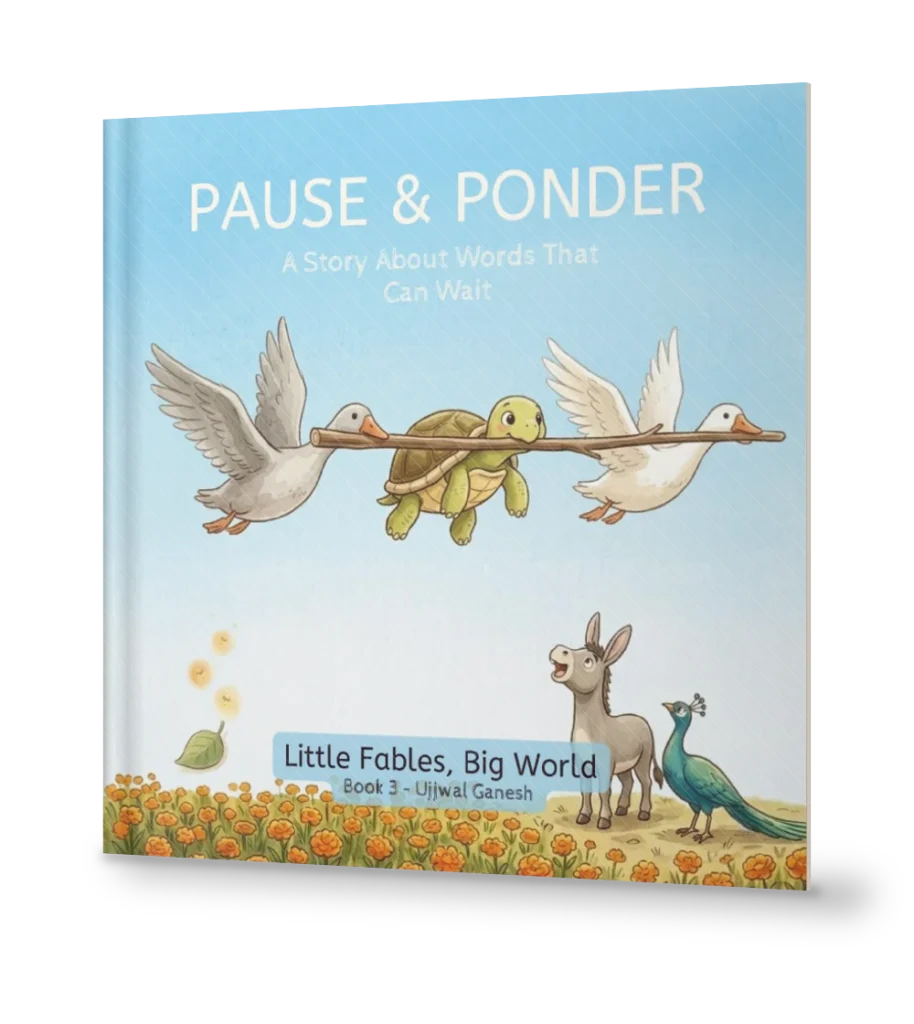
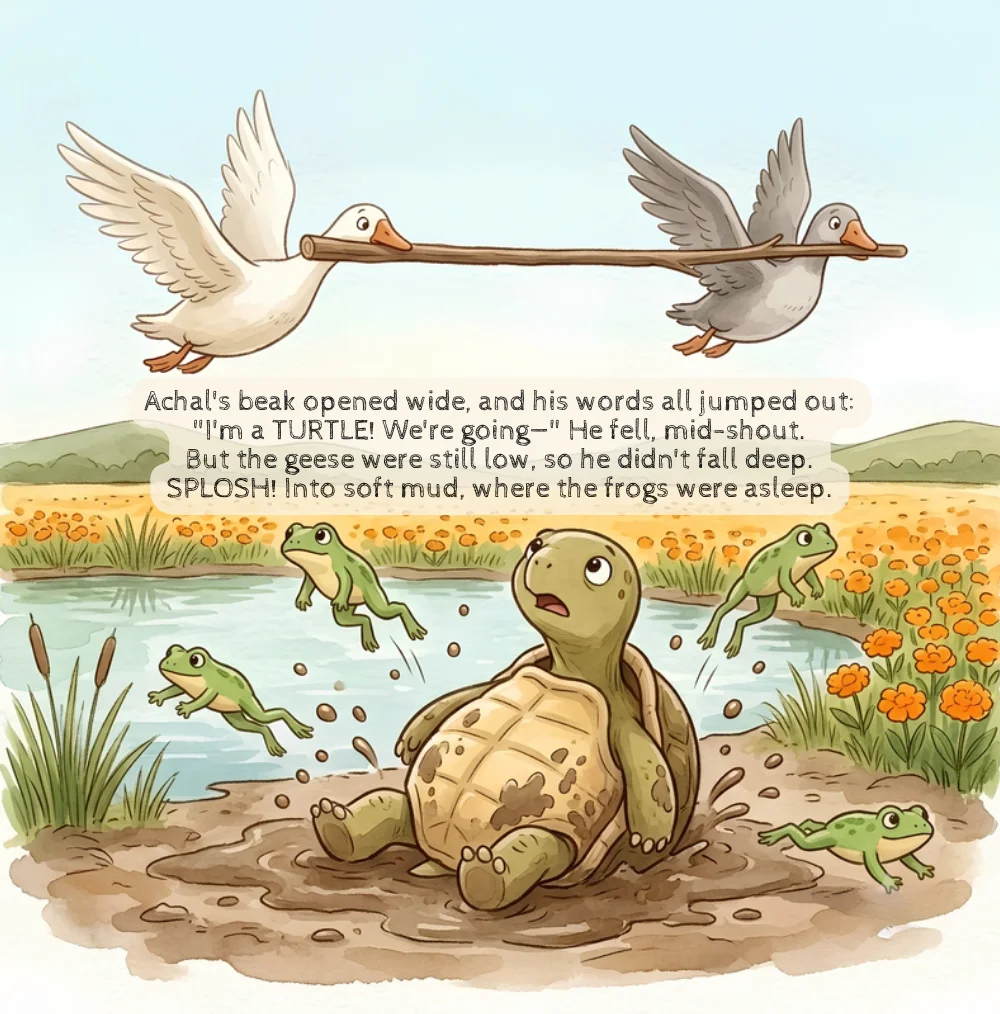
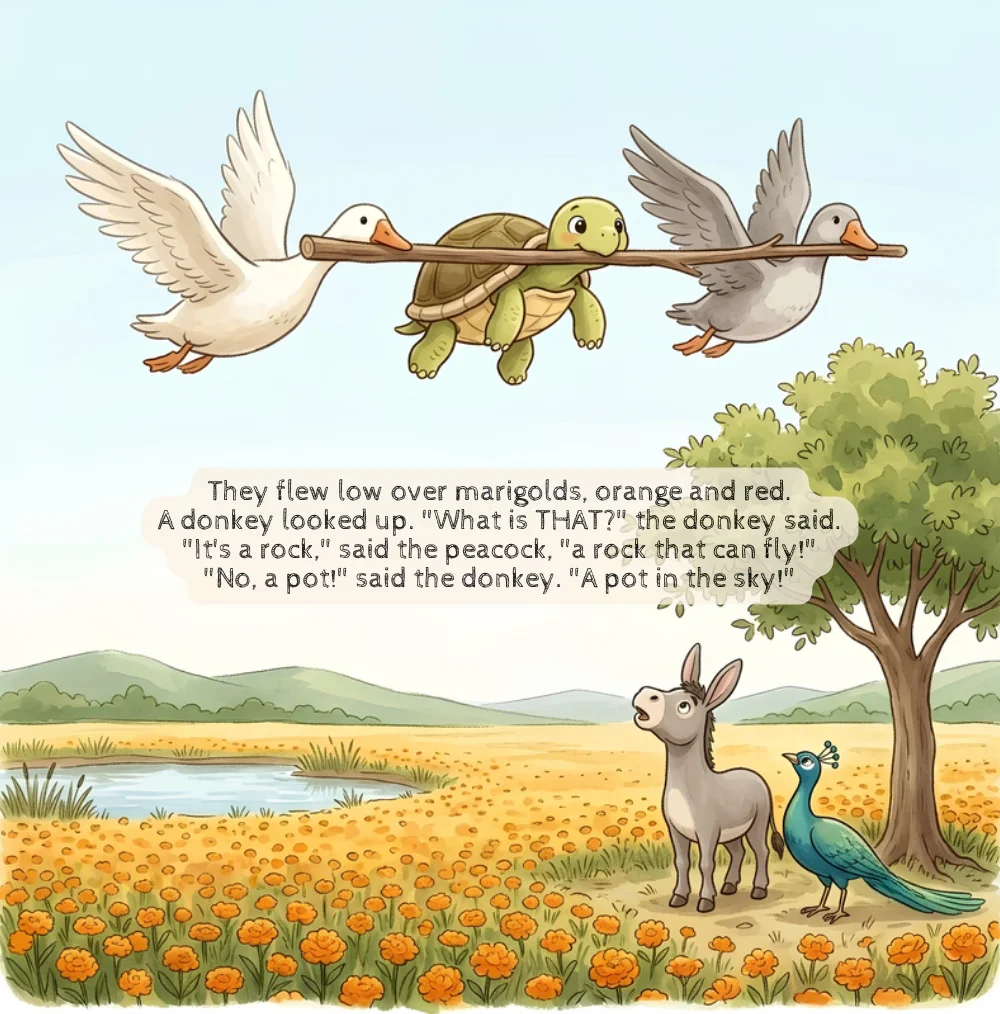
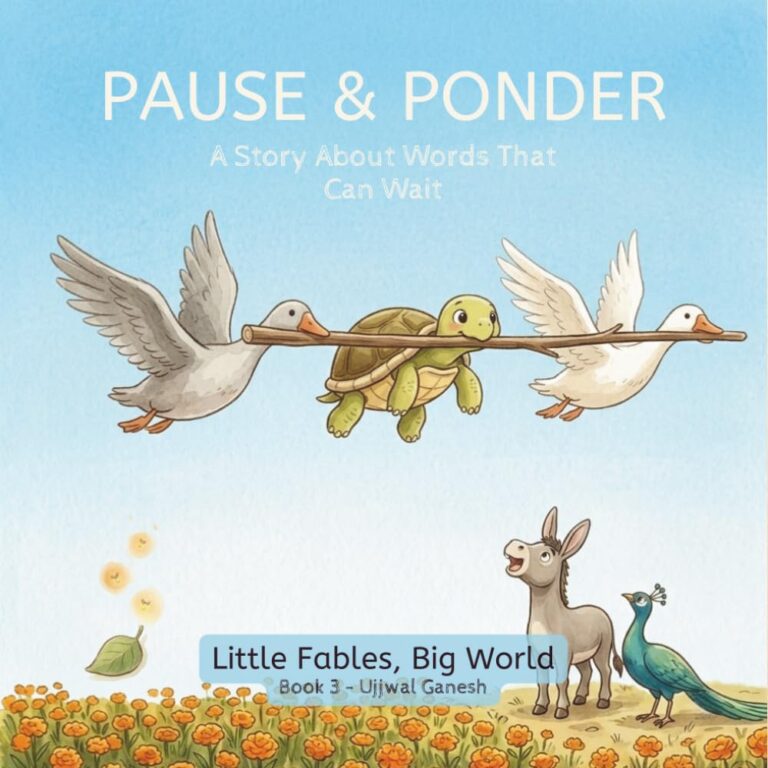
In the tale, Achal the turtle is flying with two geese, holding a stick in his beak. If he talks, he falls. Then a donkey and a peacock below get him wonderfully wrong, and his words bump and bump at the back of his beak.
Inside the story
A Hand on Your Arm, a Nod, “Go Ahead”
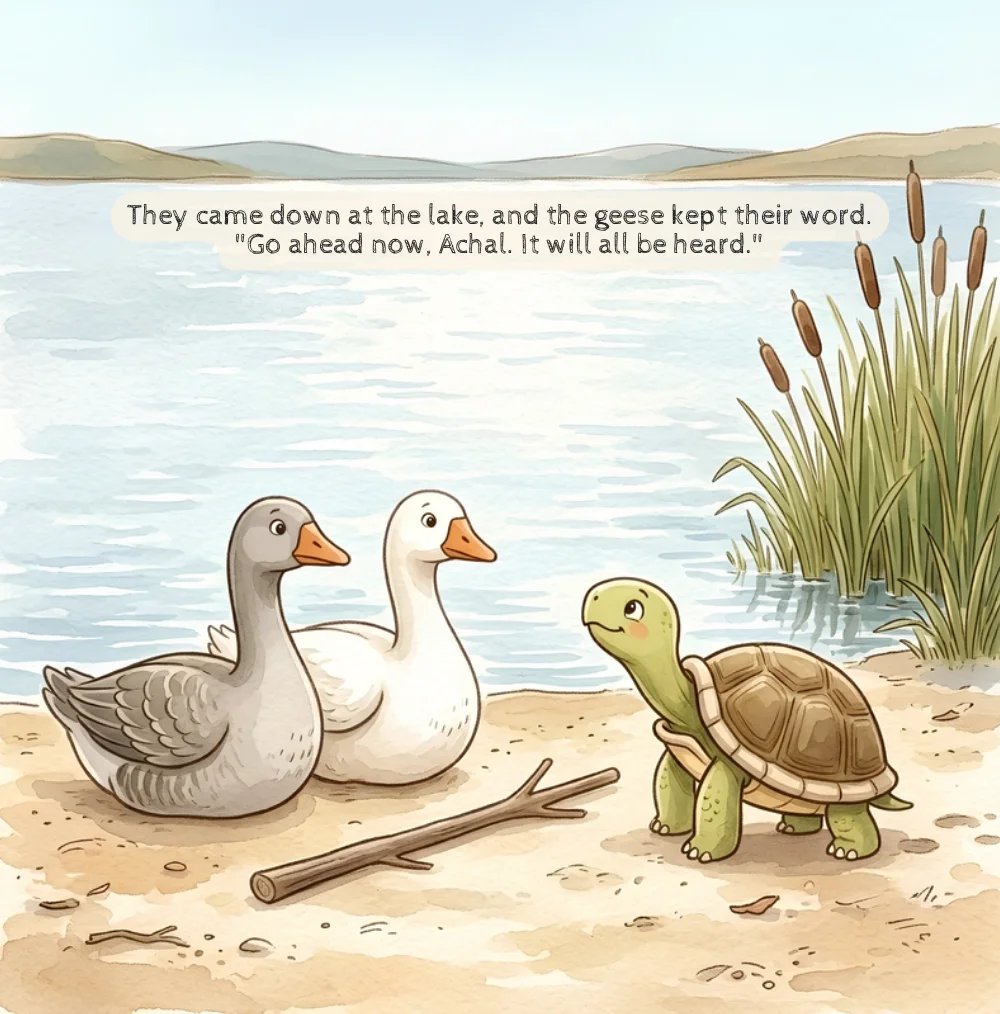
In older versions the turtle doesn’t survive. In this one he gets a second chance, and a signal: the goose looks back and nods, and he holds on until they land. Then everyone listens to the whole story.
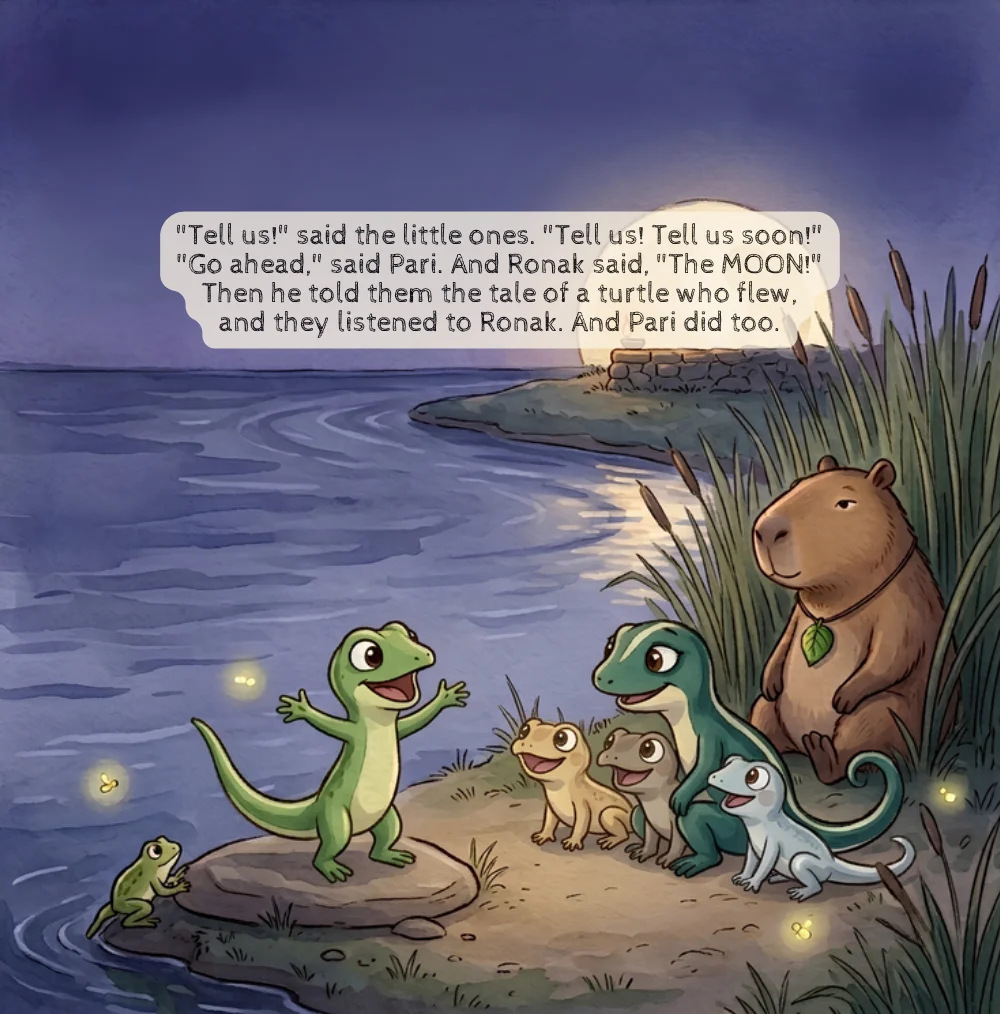
Ronak takes the same signal home: a hand on your arm, a look and a nod, then “Go ahead.” He ends the book telling a whole tale with everyone listening, just not over the top of anyone.
At the back: a note for grown-ups on why the answer jumps out before the stopping arrives, nine questions to talk about together, a try-this-at-home page and a say-the-names guide.
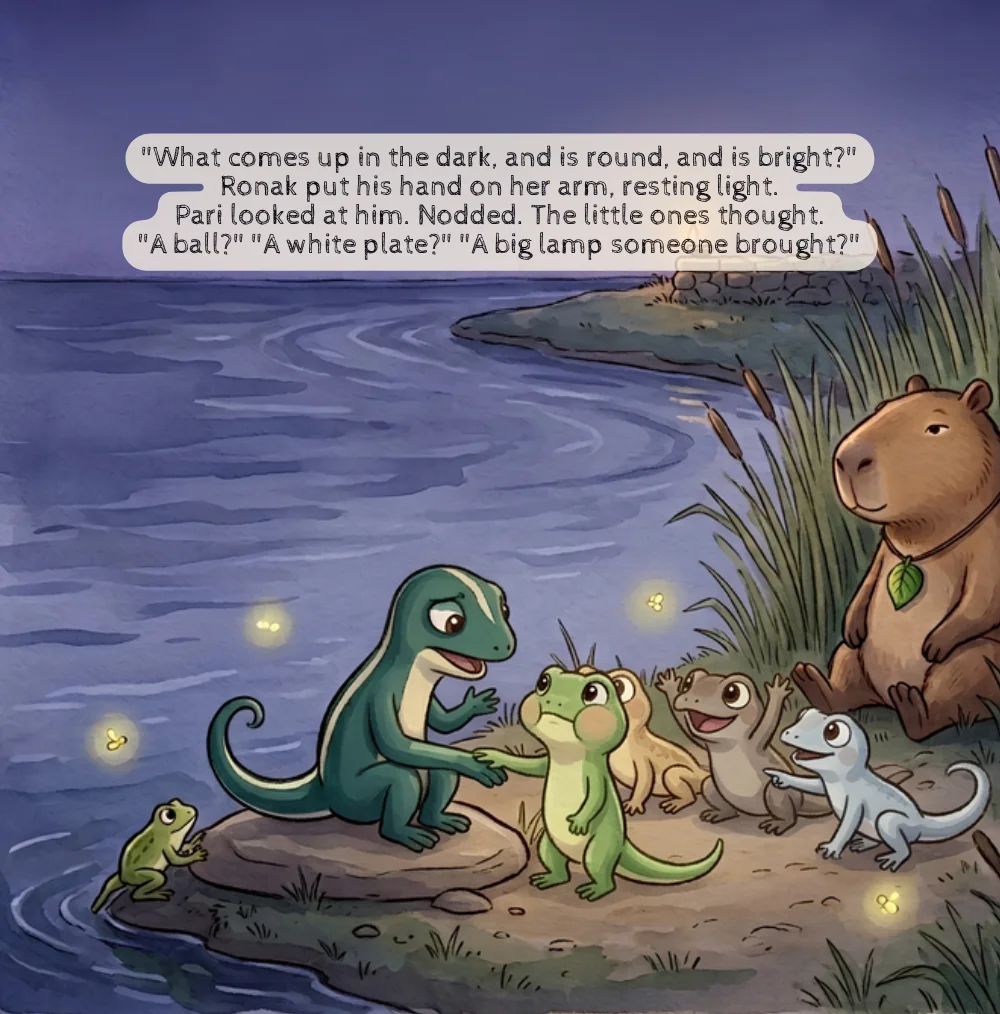
Sample pages
Look inside Pause & Ponder
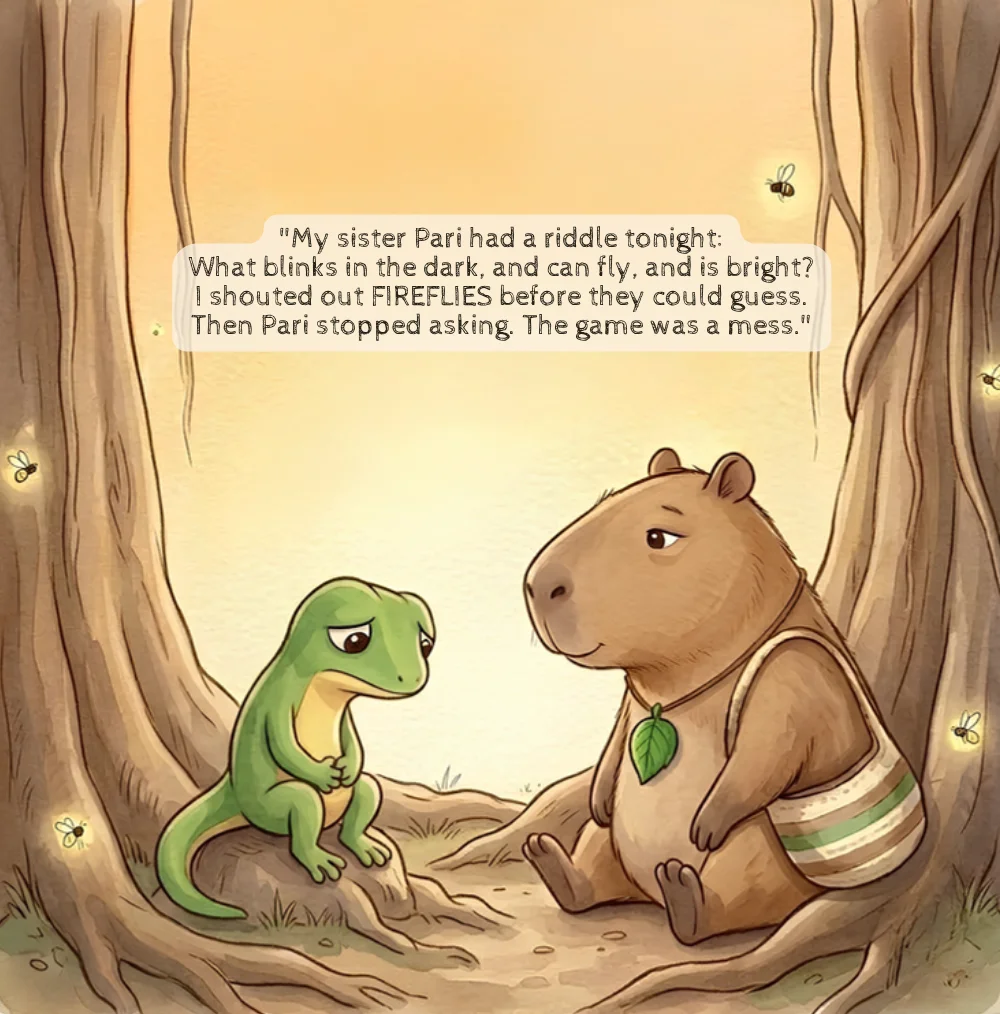
A few watercolour pages from the story. Tap any page to see it larger.
Why it helps
What Your Child Takes Away
Pause & Ponder doesn’t ask for a quieter child. It gives a quick-thinking, talkative child a way to hold a thought, and gives the people around them a way to say “your turn.”
Holding a Thought
Children see that a finished thought can wait a moment without being lost.
A Signal They Can Use
A hand on an arm, a look and a nod: a small, real-world cue for families and classrooms.
Second Chances
Achal falls, climbs out of the mud and tries again, showing that a mistake isn’t the end.
Everyone Gets Heard
The story ends with listening on both sides, not silence.

Get the book
Pause & Ponder
For the Child Who Always Knows the Answer: A Rhyming Fable About Waiting to Speak
Also on Amazon.com: Kindle
Other Amazon stores
Paid links: as an Amazon Associate I earn from qualifying purchases.