The everyday problem
Why Messages Float Away
“Go upstairs, get your shoes and brush your teeth.” By the top of the stairs, half of it is gone. Young children can hold only a little in mind at once, and every distraction can push a message out.
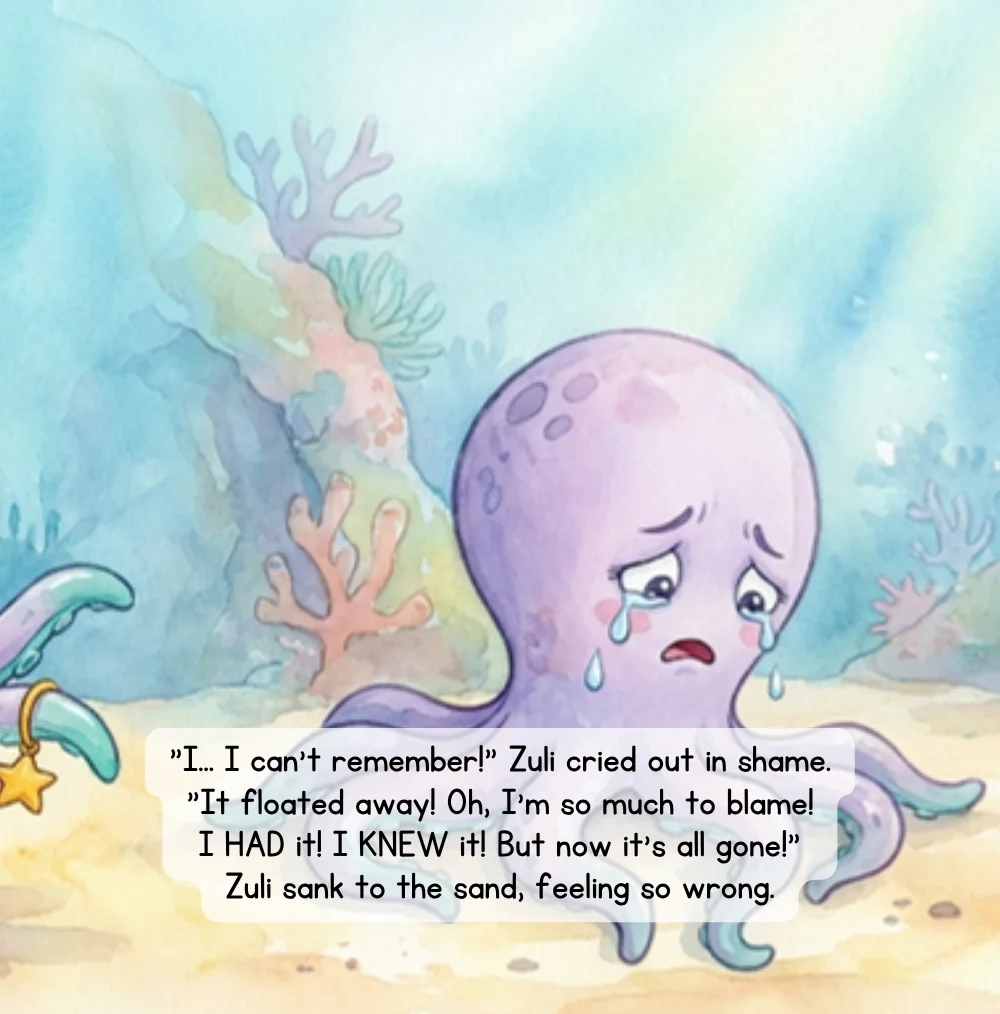
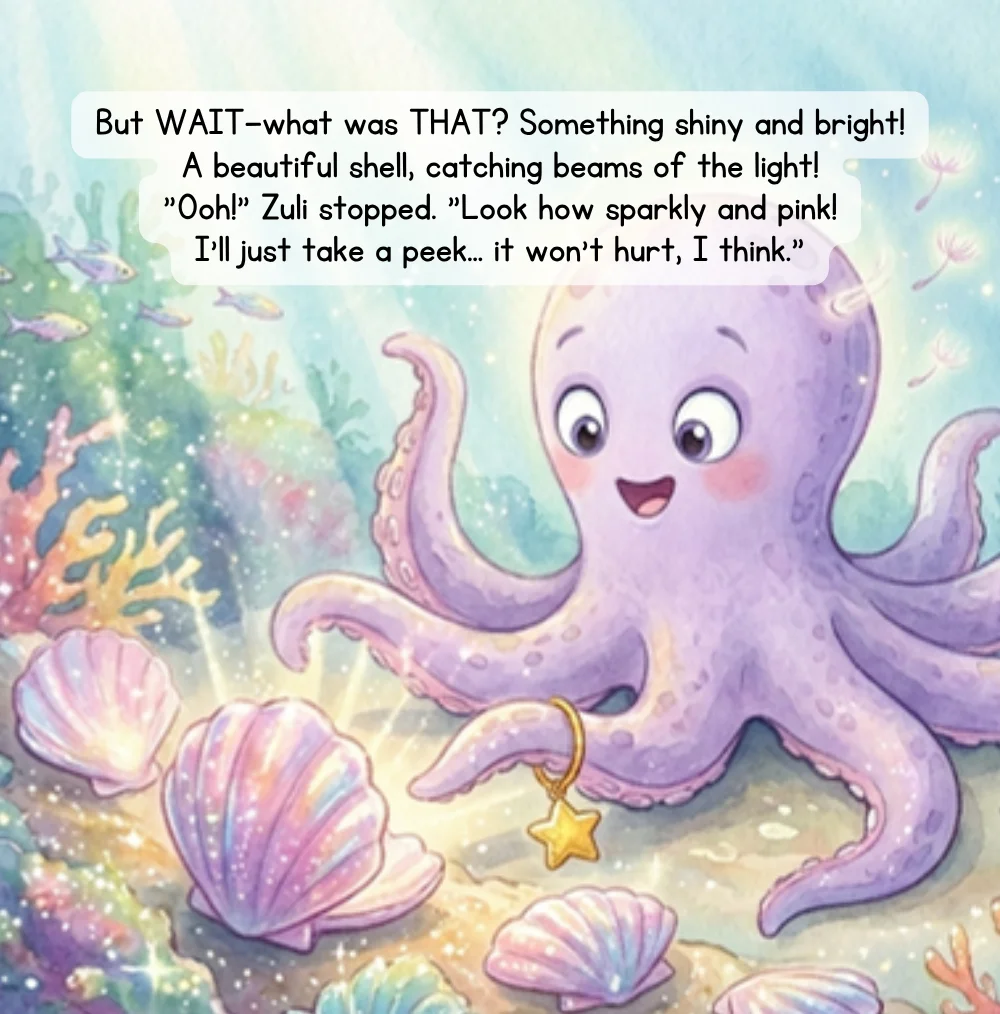
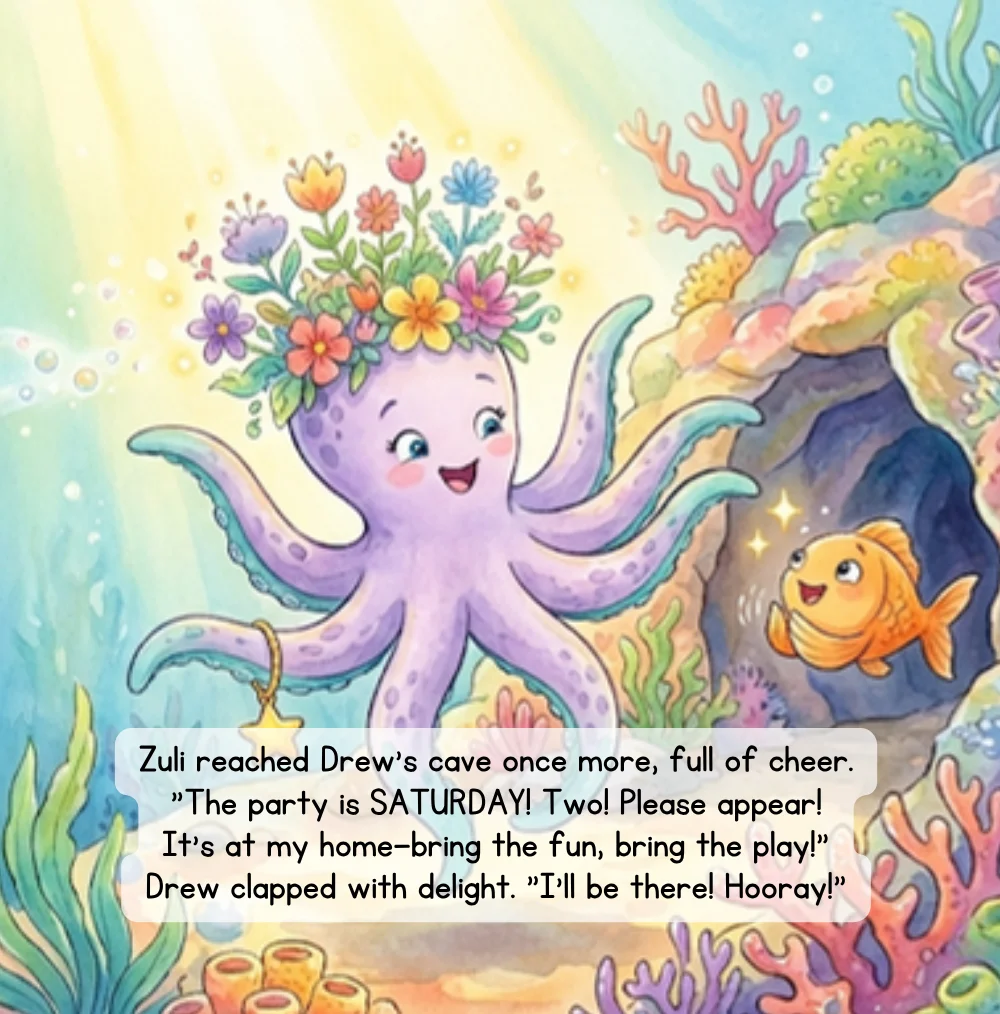
Zuli is sure the message is safe: “Saturday, two!” Then come the shells, the bubbles and the race, and at Drew’s door the words have floated away. The shame and frustration are real.
Inside the story
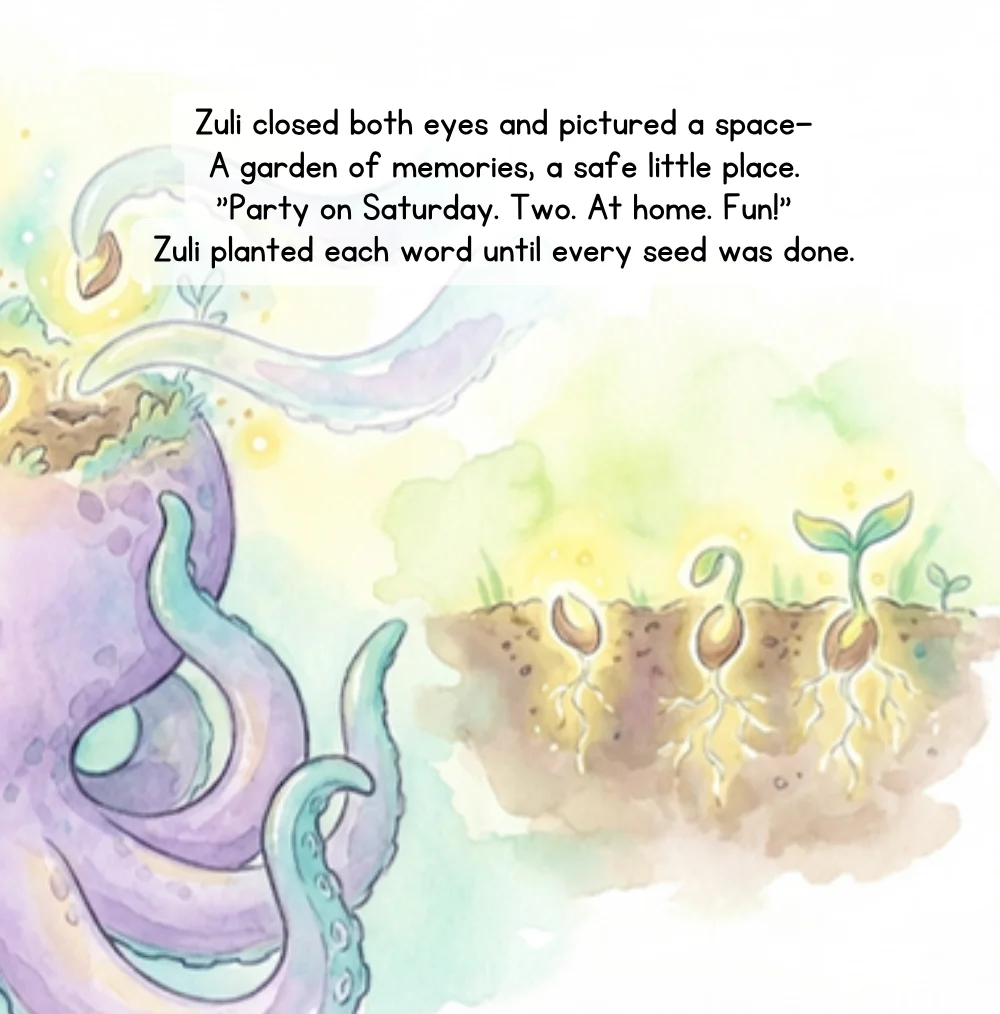
Plant It, Then Water It
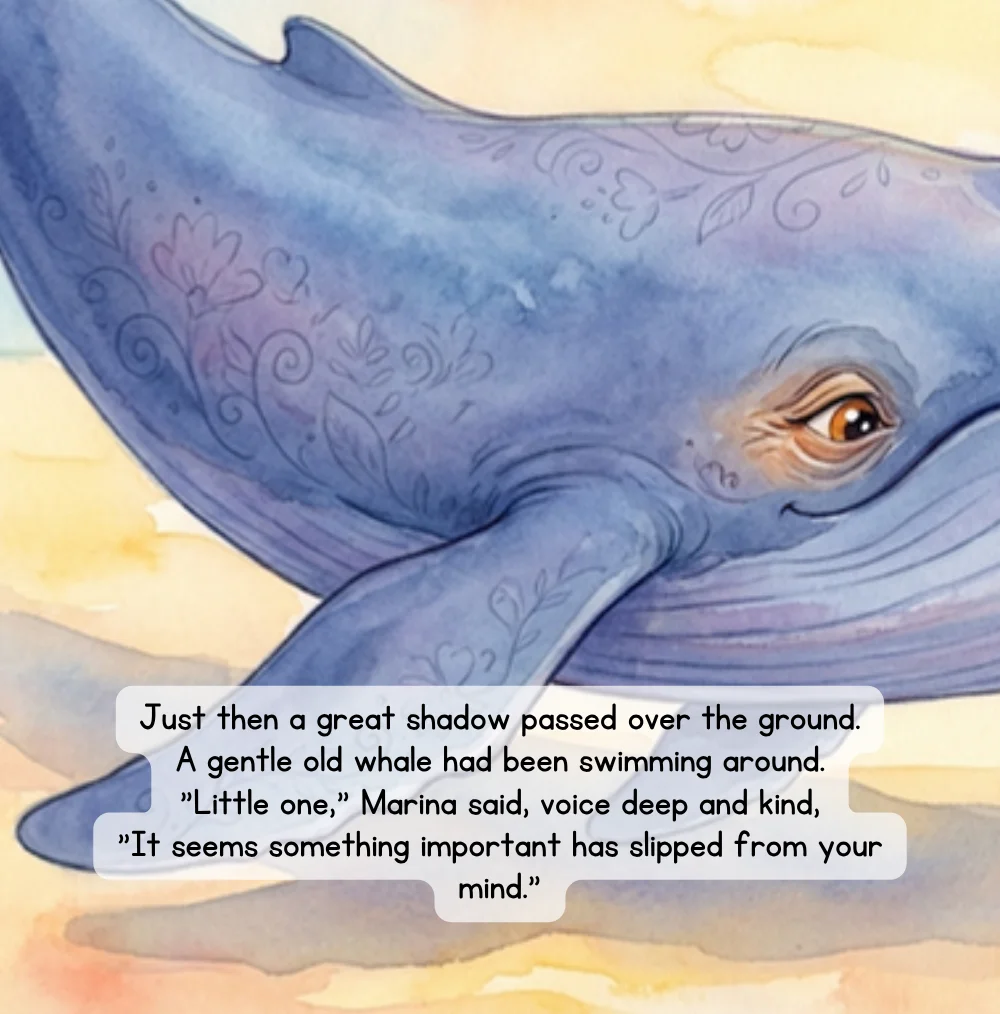
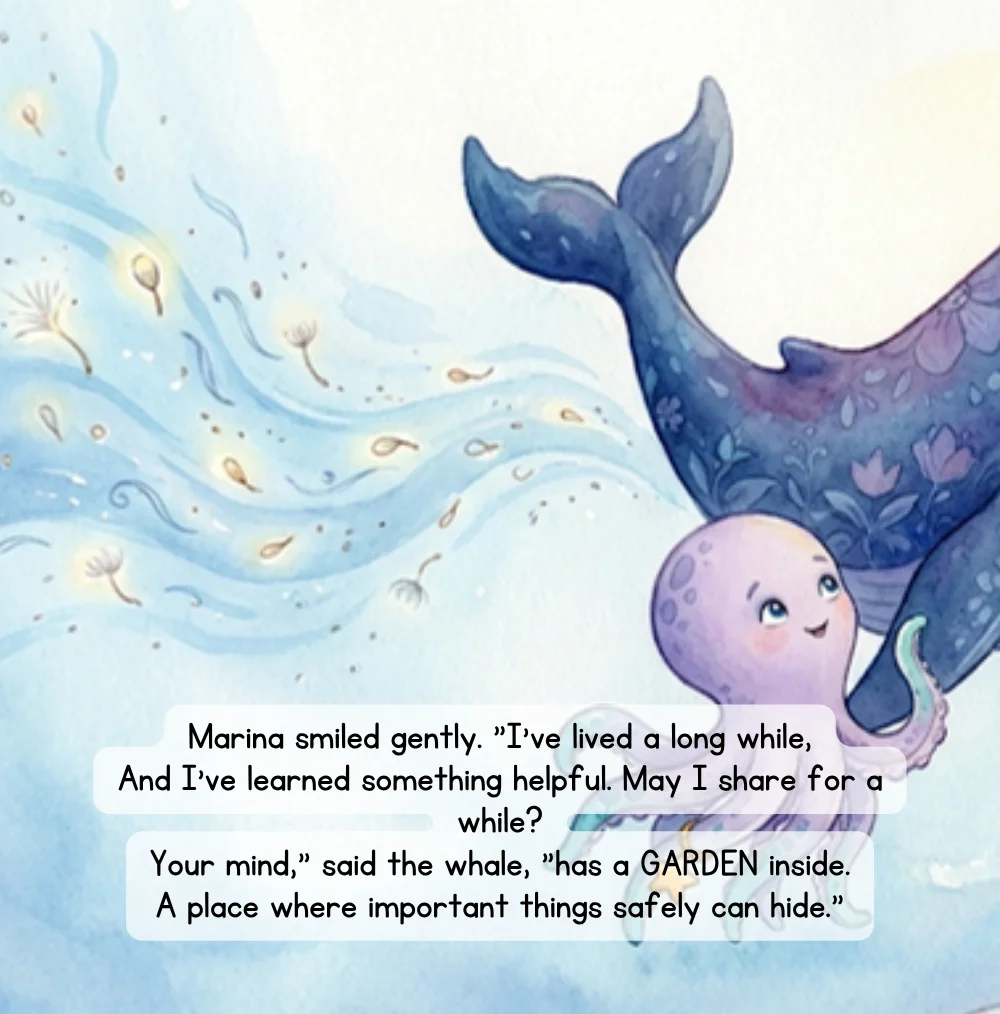
Marina doesn’t tell Zuli to try harder. She explains that important things are seeds: if you only hear them, they drift off, but if you plant them, they take root. Stop for a moment. Say it out loud. Say it again. Picture it growing. Then water it by repeating it on the way.
Zuli tries again, and this time the message arrives. The refrain gives your child the steps: “When something’s important and I need it to stay, I plant it like a seed so it won’t float away.”
At the back: a note for grown-ups on working memory, scripts for planting memories together, conversation starters and activities.
Sample pages
Look inside Remember & Grow
A few watercolour pages from the story. Tap any page to see it larger.
Why it helps
What Your Child Takes Away
Remember & Grow replaces “Why don’t you ever listen?” with a strategy children can actually use, and a shared phrase for instructions, errands and school mornings.
Forgetting Isn’t Failing
Children learn that messages slip away for everyone, so a mistake doesn’t turn into shame.
The Memory Garden
A picture that makes remembering feel like something you do, not something you either have or don’t.
Say It, Repeat It, Picture It
Three active steps that help a message take root.
Ready for Instructions
Practise with multi-step tasks at home, one planted seed at a time.

Get the book
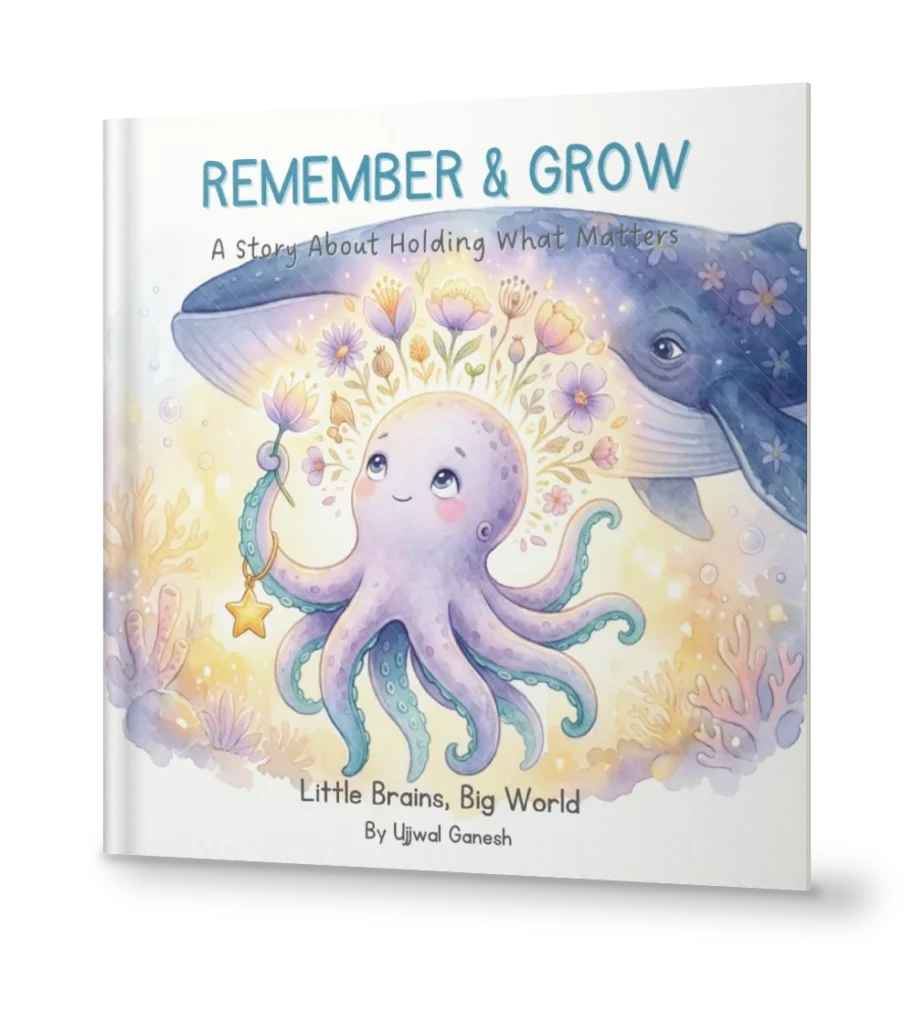
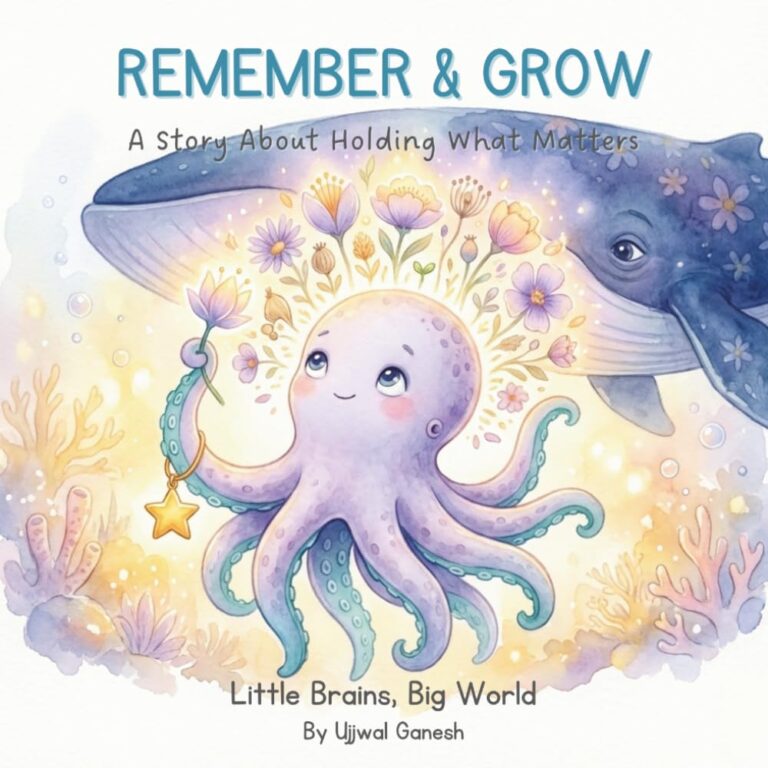
Remember & Grow
“I Forgot!” A Rhyming Story About Remembering What Matters
Also on Amazon.com: Kindle
Other Amazon stores
Paid links: as an Amazon Associate I earn from qualifying purchases.